Showing posts with label Inspiration. Show all posts

8 Sept 2011

Things to do this Autumn

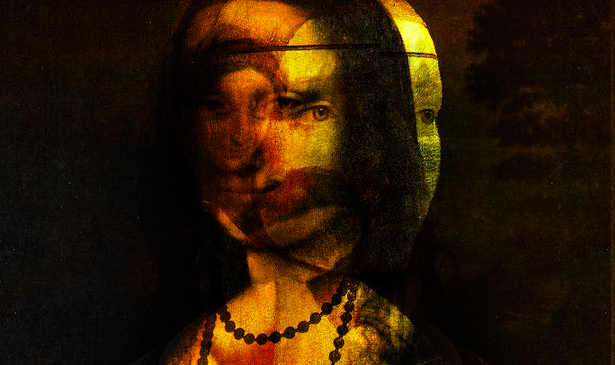
Leonardo da Vinci: Painter at the Court of Milan
National Gallery
This is the most complete display of Leonardo's rare surviving paintings ever held and one of the most eagerly anticipated gallery events for many years.
The exhibition focuses on Leonardo as an artist and concentrates on the work he produced as court painter to Duke Lodovico Sforza in Milan in the late 1480s and 1490s. Booking early is strongly recommended.

9 November 2011 – 5 February 2012
http://www.nationalgallery.org.uk/whats-on/exhibitions/leonardo-da-vinci-painter-at-the-court-of-milan


Sculpture in Gloucester
Gloucester Cathedral
Featuring work by Anthony Gormley, Damien Hirst, Sir Eduardo Palozzi, Jon Buck and others until October 30th, organised by the cathedral and Gallery Pangolin.
The cathedral has been at the centre of stonemasonry production for 900 years and still employs seven masons. The work of one of these, Jordi Raga Frances, is included.

Until 30 October
www.crucible2010.co.uk

www.thecityofgloucester.co.uk


Top Drawer
Olympia, London
See the best British and international retail suppliers exhibiting under one roof.
Retail areas covered include: Fashion and accessories, Home, Childrens, Gifts,
Stationary & greetings and Wellbeing.

11 – 13 September
http://www.topdrawer.co.uk/


Farmers Markets with the National Trust
Various sites around the country
Find a local market near you or visit the National Trust site for recommendations

Various Dates
http://www.nationaltrust.org.uk/main/w-vh/w-visits/w-events/w-events-food_farming.htm

Or a general search: http://www.farmersmarkets.net/


The Romantics
Tate Britain
This autumn the Tate showcases major works by Henry Fuseli, JMW Turner, John Constable and Samuel Palmer, as well as newly-acquired works by William Blake – a must for those of who like nothing better than wondering around Europe in lacy shirts while under the influence of opium.

From 9 August
http://www.tate.org.uk/britain/exhibitions/romantics/default.shtm

7 Apr 2011

5 Things to do this Spring

 1. Diaghilev Festival – English National Opera
English National Opera 

Experience a series of revivals/re-stagings of the original versions of major ballets from the impresario Sergei Diaghilev, including; The Firebird, Scheherazade, L’Apres-midi d’un Faune and Le Pavillion d’Armide.


 2. The Cult of Beauty: The Aesthetic Movement 1860-1900 at the V&A
V&A London

‘Fashion is what one wears oneself. What is unfashionable is what other people wear.’

…so wrote Oscar Wilde, a quote which perhaps best embodies the sentiment of an extraordinary 19th Century artistic movement which sought to escape the ugliness and materialism of the Victorian era by creating a new kind of art and beauty and promoted the idea of 'art for art's sake'.

'Best Works of Aubrey Beardsley' - Dover Publications


3. Dirt – The filthy reality of everyday life - The Welcome Collection
The Welcome Collection, London 

A new major exhibition opens at the Welcome Collection with a closer look at something that is very familiar but which we are often reluctant to confront.

The exhibition brings together around 200 artefacts spanning visual art, documentary photography, cultural ephemera, scientific artefacts, film and literature, uncovering a rich history of disgust and delight in the grimy truths and dirty secrets of our past.


4. Jane Austen's TV locations – National Trust
The National Trust 

If you are a fan of Jane Austin you might want to experience the various National Trust locations around Britain that have been used for adaptations of Austin’s Novels.


5. Joan Miró – Tate Modern – from April 14th 
 Tate Modern

The Tate's big summer exhibition shows for the first time in 50 years a retrospective by the great Spanish surrealist.

23 Mar 2011

Temple Mosaic: A Jewel of Thailand

One has to be prepared for the unexpected upon entering the temple grounds of Wat Pho as very quickly there is a realisation that what from a distance looks like beautifully ornate carved structures are in fact made up of thousands of pieces of broken pottery.
 Mosaic at Wat Pho, Bangkok

The richly hued terracotta is made up of varying tones and patterns which form geometric shapes, essentially composed of detailed flowers which have a wonderfully tactile feel making them irresistible not to touch.

Wat Pho is one of the delights of visiting Bangkok and one of the largest and oldest Wats in Thailand. The Wat (which means a Buddhist temple or monastery ) dates back to the rule of King Rama I ( 1782 – 1809) and the name refers to its four tessellated spires which soar 42 meters into the sky like an oriental Tower of Babel.
Wat Pho / Wat Rong Khun


The spires or ‘Chedi’s’ were built by King Mongkut and represent the reigns of the first four kings of the Chakri Dynasty with each spire made up of different coloured mosaic: green, white, yellow and dark blue, each one contrasting with the other yet all remaining integral in their relationship to the complex as a whole.

Wat Rong Khun – Notes from a Fairytale Dream
Even from a distant Wat Rong Khum conjures up a resplendent presence. Situated in northern Thailand and designed as recently as 1997 (and still uncompleted) the temple provides a conspicuous contrast to Wat Pho or indeed to any other temple in Thailand. The structure is part giant ice sculpture and part forbidden palace from a fairytale dream as it is formed exclusively in white and mirrored glass which is supposed to signify the purity and wisdom of the Lord Buddha – the temples effect of shimmering reflections from the embedded glass, illuminates in all directions which in turn creates a natural display of glittering lights.
Wat Rong Khun, Chiang Rai,Thailand

This kinetic aura is of otherworldly proportions and the effect becomes heightened as a closer examination of the exterior reveals; mythological creatures profiled against the pale sky - demonic apparitions that dance in the light exposing an assortment of finely crafted swirls, twisted and curling ends with sharp points, mirrored eyes and serpent tongue’s spitting light in many directions. The temple is simultaneously a magnificent fantasy and a strange reality, juxtaposed against and interlaced with the surrounding landscape.
 Mosaic Inspiration: Porcelain charm encased in silver

22 Feb 2011

A Patchwork of Cultures

My love of fabrics began as a young girl watching my mother sewing our clothes. I was taught to sew on her old Bernina and this memory still evokes the smell of linseed oil and the machinegun rat-a-tat of the mechanism. She ran her own business printing textiles and making children's clothes out of old fabrics and it is these three creative processes - sewing, printing and recycling that were the inspiration behind our packaging.

The Komebukuro Bag: Inspired design
The style and sentiment of our pouches goes back to the design of the Japanese Komebukuro bag, which incorporated a sewn patchwork of different fabrics that were traditionally used to carry rice offerings to the temple during important religious ceremonies, it was also used to hold a gift connected to a significant personal event for a close friend or relative.

Indonesian Batik: An Ancient Form of Printing
The ancient artform of wax resist dyeing which is used in batik dates back to the 4th century BC where it was used in Egypt to wrap mummies. It later spread to China and India in the 6th century before finding it's way to Indonesia.

The technique involves melted wax which is applied to cloth before being dipped in dye. Any area the wax has been applied, the dye will not penetrate. Sometimes several colours are used, with a series of dyeing, drying and waxing steps.

The traditional colours used in this process include indigo, dark brown, and white, which are suppose to represent the three major Hindu Gods (Brahmā, Visnu, and Śiva). This is related to the fact that natural dyes are most commonly available in indigo and brown. Certain patterns were used to indicate your social status, so traditionally, wider stripes or wavy lines would indicated that you were higher up in social standing. Consequently, during ceremonies, one could determine the royal lineage of a person by the cloth he or she was wearing.

Japanese Cotton: The Art of Recycling
The use of cotton textiles has a long history in Japan, dating back to at least the early 17th century. During the various trade embargoes in this period, industrious Japanese women  perfected several sewing techniques in order to give renewed life to previously unwanted cloths as cotton was scarce. They used material that was readily available like old cloth and rags, patchworking them together and using them to make warm clothing, futon covers and other common household items.

The resulting combination of these different design styles, materials, printing methods, cultures and stories has determined much of our brand ethos and had a particular appeal in the making of our packaging.


Image sources:
www.tokugawaantiques.com
http://mamifleur.canalblog.com
www.kimonoboy.com


9 Feb 2011

An oasis of colour


One of the pleasures of working with gemstones is the vast range of colour combinations they can provide. Every stone reflects the culture, origins and geography in which it was found.


Two artists whose use of colour has inspired me in my designs are Mark Rothko and Francis Bacon. Both artists use colour to create beautiful, unusual and vibrant combinations that stir different emotions in you – Rothko's calm, soothing tones are matched by Bacon's kinetic energy.


These new bracelets from our summer collection are part of the inspiration.


Bacon and Rothko's paintings remind me of the vibrancy and unexpectedness of the cities of Morocco, where a beautiful oasis’s of colour can be found behind almost every door and garden gate. 
For anyone who has been to Marrakesh, one of the most enchanting experiences is to be found in the gardens of the Jardin Majorelle. This setting provides a tranquil experience which offsets the restless energy of the city. One of the delights is that many of the buildings and ornaments of the garden are painted in a deep sea blue which is juxtaposed perfectly with the tropical vegetation of the garden. Once there, one's immediate thoughts are of the peaceful moment but with a thought to the future – in coming home and trying to recreate that moment in your small 2m sq garden!


4 Feb 2011

"Love and Compassion" Thai Amulets

"Love and compassion are necessities, not luxuries. Without them, humanity cannot survive."
(Dalai Lama)

 This is a gorgeous photo of two Thai woman sharing each others amulets.

The Thai amulet originated as a Buddhist devotional amulet but now they are more commonly used as personal, power enhancing and protective amulets. They can represent many different Gods.


A very good Thai friend made me promise only to use these amulets on necklaces, where Buddha can sit close to your heart x